
What is Steel Detailing?

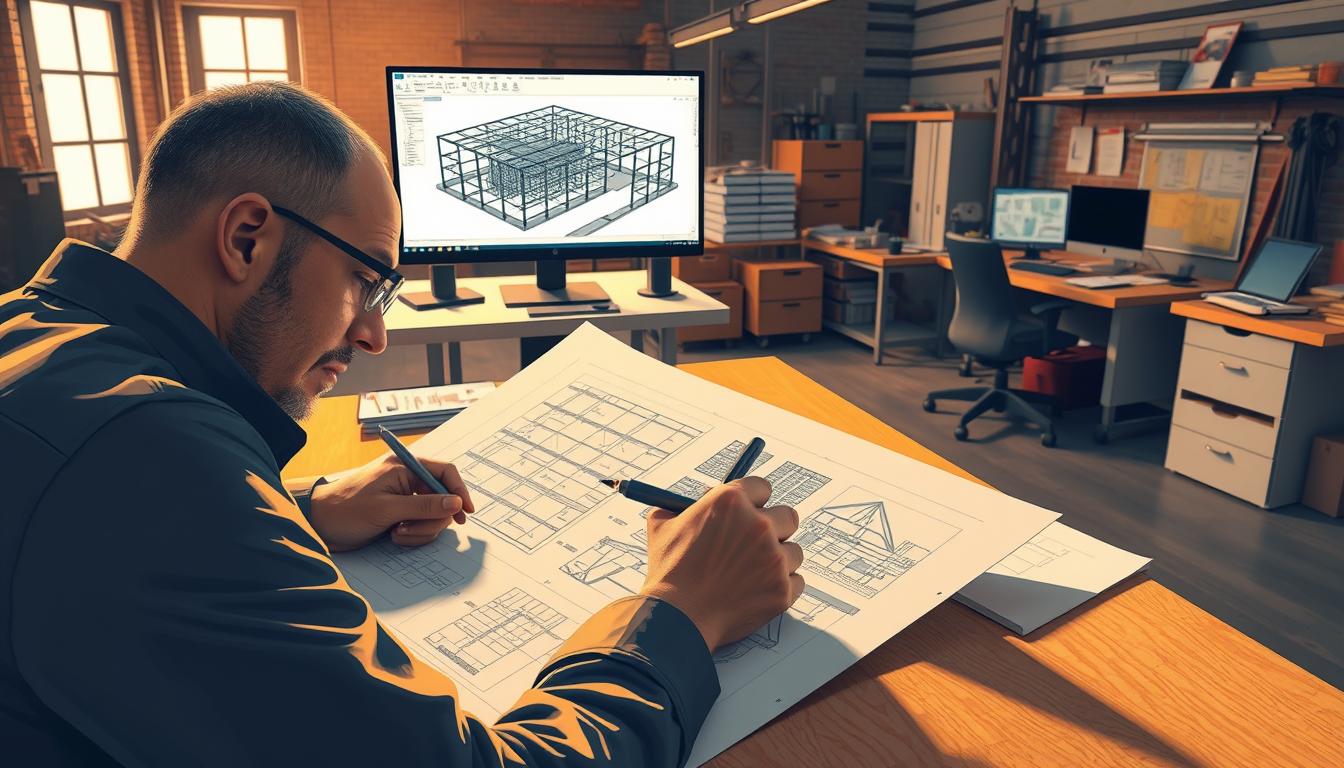
Have you ever wondered how steel structures, like bridges and skyscrapers, are brought to life with precision and accuracy? The answer lies in a crucial process known as steel detailing services.

Steel detailing is a specialized service that involves creating detailed drawings and models of steel structures. This process is essential for ensuring that the steel components are fabricated and assembled correctly, meeting the required safety standards and specifications.
Key Takeaways
- Steel detailing is a critical process in the construction industry.
- It involves creating detailed drawings and models of steel structures.
- Steel detailing services ensure accuracy and precision in steel fabrication and assembly.
- The process is essential for meeting safety standards and specifications.
- Steel detailing is a specialized service that requires expertise and precision.
What is Steel Detailing?
Steel detailing is a specialized service that involves creating detailed drawings and models of steel structures. This process is essential for ensuring that the steel components are fabricated and assembled correctly, meeting the required safety standards and specifications.
Key Takeaways
- Steel detailing is a critical process in the construction industry.
- It involves creating detailed drawings and models of steel structures.
- Steel detailing services ensure accuracy and precision in steel fabrication and assembly.
- The process is essential for meeting safety standards and specifications.
- Steel detailing is a specialized service that requires expertise and precision.
Understanding Steel Detailing
At its core, steel detailing is about translating design concepts into precise, fabricable details that can be efficiently constructed. This process is fundamental to the successful execution of construction projects.
Definition and Core Concepts
Steel detailing involves creating detailed drawings and models of steel structures. It requires a deep understanding of steel detailing process and its significance in construction.
Key Terminology in Steel Detailing
Key terms include “shop drawings,” “erection plans,” and “bill of materials.” Understanding these terms is crucial for effective communication among stakeholders.
Steel Detailing vs. Structural Engineering
While structural engineering focuses on the design and analysis of structures, steel detailing is concerned with the fabrication and erection of steel components. Both are critical but distinct aspects of construction projects.
Role in Construction Projects
The importance of steel detailing cannot be overstated, as it directly impacts the quality, cost, and timeline of construction projects.
Stakeholder Collaboration
Effective steel detailing requires collaboration among architects, engineers, fabricators, and contractors. This ensures that all parties are aligned and that projects proceed smoothly.
Project Timeline Integration
Steel detailing is an integral part of the project timeline, influencing both the fabrication and erection phases. Timely and accurate detailing is essential to avoid delays.
The History and Evolution of Steel Detailin
From manual drafting to sophisticated 3D modeling, the evolution of steel detailing has been remarkable. The industry has witnessed significant transformations, driven by technological advancements and changing project requirements.
Origins of Steel Detailing
Steel detailing has its roots in traditional drafting techniques. The manual drafting era marked the beginning of detailed steel fabrication drawings.
Manual Drafting Era
Initially, steel detailing was done manually, involving hand-drawn sketches and calculations. This labor-intensive process was prone to errors and required skilled drafters.
Transition to Computer-Aided Design
The advent of computer-aided design (CAD) revolutionized steel detailing. Software solutions enabled faster, more accurate drawings and facilitated complex project management.
Modern Advancements
Modern steel detailing is characterized by advanced software and technologies. The shift to 3D modeling has significantly impacted the industry.
3D Modeling Revolution
The introduction of 3D modeling software has transformed steel detailing. It allows for more accurate and detailed models, enhancing collaboration and reducing errors.
Future Trends in Steel Detailing
Emerging technologies like Building Information Modeling (BIM) and artificial intelligence (AI) are set to further revolutionize steel detailing. These advancements promise increased efficiency and precision.

steel detailing techniques
As the industry continues to evolve, the adoption of innovative steel detailing software and techniques will be crucial. The future of steel detailing looks promising, with technology driving improvements in accuracy, efficiency, and collaboration.
| Era | Characteristics | Impact |
| Manual Drafting | Hand-drawn sketches, labor-intensive | Prone to errors, time-consuming |
| CAD Introduction | Faster, more accurate drawings | Increased productivity, reduced errors |
| 3D Modeling | Detailed models, enhanced collaboration | Improved accuracy, better project management |
What is Steel Detailing? A Comprehensive Overview
At its core, steel detailing is about translating design concepts into actionable plans. This process is fundamental to the successful execution of construction projects, ensuring that steel structures are fabricated and erected accurately.
Steel detailing involves the creation of detailed drawings, known as steel detailing drawings, which provide the necessary information for the fabrication and assembly of steel components. These drawings are critical for the construction process, as they help to identify potential issues before they become major problems.
The Science Behind Steel Detailing
The science behind steel detailing is rooted in engineering principles and material specifications. Understanding these fundamentals is crucial for producing accurate and effective steel detailing drawings.
Engineering Principles Applied
Steel detailing relies heavily on engineering principles, including the application of structural analysis and design theories. These principles guide the creation of steel detailing drawings, ensuring that the structures are safe, durable, and meet the required specifications.
Material Specifications and Standards
Material specifications and standards play a vital role in steel detailing. The selection of appropriate materials and adherence to industry standards are critical for ensuring the quality and integrity of the steel structures. This includes compliance with standards related to material properties, fabrication processes, and erection procedures.
Types of Steel Detailing Projects
Steel detailing is applied across a wide range of construction projects, from commercial and industrial buildings to residential structures and specialized facilities.
Commercial and Industrial Applications
In commercial and industrial settings, steel detailing is used to create complex structures that meet specific functional requirements. These projects often involve large-scale steel fabrication and require precise detailing to ensure efficient construction and safe operation.
Residential and Specialized Structures
For residential projects, steel detailing is used to design and fabricate steel components that are both functional and aesthetically pleasing. Specialized structures, such as bridges and stadiums, also rely on steel detailing for their construction, highlighting the importance of steel detailing in achieving complex architectural designs.

steel detailing drawings
The importance of steel detailing cannot be overstated, as it directly impacts the success of construction projects. By understanding the science behind steel detailing and its applications, professionals in the construction industry can better appreciate the value it brings to the building process.
The Steel Detailing Process Explained
The process of steel detailing involves several critical stages, from initial planning to fabrication support. Understanding these stages is essential for appreciating the complexity and importance of steel detailing in construction projects.
Initial Planning and Design
The initial stage of the steel detailing process involves thorough planning and design. This stage is crucial for setting the foundation for the entire project.
Gathering Project Requirements
Gathering all project requirements is the first step in the initial planning phase. This includes understanding the project’s scope, timelines, and specific client needs.
Preliminary Analysis
A preliminary analysis is conducted to assess the project’s feasibility and identify potential challenges. This step helps in creating a more accurate and efficient detailing plan.
Creating Shop Drawings
Creating detailed shop drawings is a core activity in the steel detailing process. These drawings provide the necessary details for fabricating and assembling steel components.
Component Detailing
Component detailing involves creating precise drawings of individual steel components. This ensures that each part is accurately fabricated according to the project’s specifications.
Assembly Planning
Assembly planning is critical for ensuring that steel components fit together correctly on-site. Detailed plans are created to guide the assembly process, minimizing errors and delays.

steel detailing process
Review and Approval Process
The review and approval process is a vital step that ensures the accuracy and quality of the steel detailing work. It involves both internal quality checks and client approvals.
Quality Assurance Checks
Internal quality assurance checks are conducted to verify that the detailing work meets the required standards and specifications. This step helps in identifying and correcting any errors early on.
Client and Engineer Approval
Once the detailing work is completed, it is submitted to the client and relevant engineers for approval. Their feedback is incorporated, and necessary revisions are made before proceeding.
Fabrication Support
Fabrication support is the final stage of the steel detailing process, where detailed plans and lists are provided to facilitate the fabrication and installation of steel components.
Material Lists and Cutting Plans
Detailed material lists and cutting plans are prepared to guide the fabrication process. These documents ensure that the right materials are used and that they are cut to the correct dimensions.
On-site Technical Assistance
On-site technical assistance is often provided to address any questions or issues that arise during the fabrication and assembly process. This support helps in ensuring a smooth execution of the project.
In conclusion, the steel detailing process is a multifaceted and detailed-oriented process that is crucial for the successful execution of construction projects involving steel structures. By understanding the various stages involved, from initial planning to fabrication support, one can appreciate the value that a professional steel detailing company brings to a project.
Importance of Steel Detailing in Construction
The importance of steel detailing in construction cannot be overstated. It is a critical process that ensures the structural integrity, cost efficiency, and timely completion of construction projects.
Ensuring Structural Integrity
Steel detailing is vital for ensuring the structural integrity of a building. It involves creating detailed drawings that help in identifying potential errors and verifying the load capacity of the structure.
Error Prevention and Safety
Accurate steel detailing prevents errors that could lead to safety hazards. By detecting and rectifying mistakes early, it ensures a safer construction process.
Load Capacity Verification
It also verifies the load capacity of the structure, ensuring that it can withstand various stresses and loads, thus enhancing the overall safety and durability of the building.
Cost Efficiency Benefits
Steel detailing contributes to cost efficiency by optimizing material usage and reducing construction delays.
Material Optimization
Detailed drawings help in optimizing the use of materials, thereby reducing waste and saving costs.
Reduced Construction Delays
By streamlining the fabrication and installation processes, steel detailing helps in minimizing delays, which in turn reduces overall project costs.
Time-Saving Advantages
The precision offered by steel detailing services significantly reduces the time required for fabrication and installation.
Streamlined Fabrication
Detailed drawings enable fabricators to work more efficiently, streamlining the fabrication process.
Efficient Installation Processes
Similarly, accurate detailing ensures that the installation process is smooth and efficient, saving time and labor.
| Benefits | Description | Impact |
| Structural Integrity | Ensures the structure can withstand stresses and loads | Enhanced safety and durability |
| Cost Efficiency | Optimizes material usage and reduces delays | Reduced project costs |
| Time-Saving | Streamlines fabrication and installation | Faster project completion |
Essential Steel Detailing Drawings and Documentation
The process of steel detailing is deeply rooted in the creation of detailed drawings and supporting documentation. These documents are crucial for the successful execution of construction projects, serving as the blueprint for fabrication and erection processes.
Shop Drawings in Detail
Shop drawings are a fundamental component of steel detailing, providing detailed information necessary for the fabrication of steel components. They are used to translate design concepts into practical fabrication and assembly instructions.
Single-Part Drawings
Single-part drawings focus on individual components, detailing their dimensions, material specifications, and other relevant fabrication details. These drawings ensure that each part is manufactured correctly.
Assembly Drawings
Assembly drawings illustrate how various components are assembled, showing the relationships between different parts. They are essential for ensuring that the fabricated components fit together as intended.
Erection Plans and Diagrams
Erection plans and diagrams are critical for the on-site assembly of steel structures. They provide detailed instructions on how to position and connect the steel components.
Layout and Positioning
Erection plans detail the layout and positioning of steel components, ensuring that the structure is erected according to the design specifications. This includes information on the placement of beams, columns, and other structural elements.
Connection Details
Connection details are a vital aspect of erection plans, specifying how different components are connected. This includes information on bolt arrangements, weld specifications, and other connection methods.
Bill of Materials and Reports
A comprehensive bill of materials and related reports are essential for managing the procurement and inventory of steel components. These documents detail the materials required for fabrication, facilitating accurate cost estimation and procurement processes.
Material Specifications
Material specifications outline the required properties and characteristics of the materials to be used, ensuring that they meet the project’s quality and safety standards.
Quantity Takeoffs
Quantity takeoffs involve calculating the total amount of materials needed for the project. This information is crucial for procurement and budgeting purposes.
Leading Steel Detailing Software and Technologies
The use of advanced software and technologies has revolutionized the steel detailing process. These innovations have not only improved the accuracy and efficiency of steel detailing but have also enhanced the overall quality of construction projects.
3D Modeling Software
3D modeling software has become a cornerstone in steel detailing, allowing for the creation of detailed and accurate models. These models help in visualizing the project, identifying potential issues, and streamlining the fabrication process.
Tekla Structures
Tekla Structures is a powerful 3D modeling software that supports the creation of detailed steel models. It is widely used in the construction industry for its ability to improve project efficiency and reduce errors.
Advance Steel
Advance Steel is another prominent 3D modeling software that offers comprehensive tools for steel detailing. It enables users to create complex steel structures with precision and ease.
SDS/2
SDS/2 is a well-established steel detailing software known for its accuracy and reliability. It is used for creating detailed shop drawings and managing the fabrication process.
CAD-Based Solutions
CAD-based solutions are also widely used in steel detailing, offering a range of tools for drafting and design. These solutions are essential for creating precise drawings and documentation.
AutoCAD
AutoCAD is a popular CAD software that provides a robust platform for drafting and design. It is widely used in various industries, including construction and manufacturing.
Revit
Revit is a building information modeling (BIM) software that offers comprehensive tools for architectural, structural, and MEP design. It is known for its ability to integrate various aspects of a construction project.
SOLIDWORKS
SOLIDWORKS is a 3D CAD software that provides advanced tools for modeling and design. It is used in various industries for its precision and versatility.
Emerging Technologies
The steel detailing industry is also witnessing the emergence of new technologies such as virtual reality (VR) and artificial intelligence (AI). These technologies are enhancing the detailing process and improving project outcomes.
Virtual Reality Applications
Virtual reality is being used to create immersive experiences for project visualization and review. It helps in identifying potential issues and improving collaboration among stakeholders.
AI and Machine Learning Integration
AI and machine learning are being integrated into steel detailing software to automate tasks and improve accuracy. These technologies are expected to revolutionize the industry in the coming years.
As the steel detailing industry continues to evolve, the adoption of advanced software and technologies will remain crucial. Companies that embrace these innovations will be better positioned to deliver high-quality projects efficiently.
| Software | Description | Key Features |
| Tekla Structures | 3D modeling software for steel detailing | Detailed modeling, project management |
| AutoCAD | CAD software for drafting and design | Precision drafting, customization |
| SOLIDWORKS | 3D CAD software for modeling and design | Advanced modeling, simulation |
Selecting a Steel Detailing Company
Selecting a reliable steel detailing company is a critical step in ensuring the structural integrity and timely completion of your project. With the complexity of modern construction projects, the role of a steel detailing company cannot be overstated.
Key Qualifications to Look For
When evaluating potential steel detailing services, there are several key qualifications to consider. These include the company’s experience, technical capabilities, and relevant certifications.
Experience and Portfolio Assessment
A company’s experience and portfolio are crucial indicators of their ability to handle your project. Look for a company with a proven track record in handling projects similar to yours.
Technical Capabilities and Certifications
Ensure that the steel detailing company has the necessary technical capabilities and certifications. This includes proficiency in the latest steel detailing software and adherence to industry standards.
Domestic vs. Offshore Services
The decision between choosing a domestic or offshore steel detailing company depends on several factors, including communication, quality, cost, and timeline.
Communication and Quality Considerations
Effective communication is vital for the success of your project. Domestic companies may offer an advantage in this regard, but some offshore companies have also demonstrated excellent communication practices.
Cost and Timeline Factors
Cost and timeline are also critical factors. Offshore companies may offer cost savings, but it’s essential to consider the potential impact on the project timeline.
Case Studies of Successful Projects
Reviewing case studies of successful projects can provide valuable insights into a company’s capabilities. Look for examples that are relevant to your project type.
Commercial Building Examples
For instance, a steel detailing company that has successfully completed commercial building projects can demonstrate their ability to handle complex structural requirements.
Industrial Facility Projects
Similarly, companies with experience in industrial facility projects can showcase their expertise in handling large-scale steel detailing tasks.
By carefully evaluating these factors and considering the experiences of other clients, you can make an informed decision when selecting a steel detailing company for your project.
Conclusion
Understanding what steel detailing is and its importance in construction is vital for the success of any building project. As discussed, steel detailing involves creating detailed drawings and models of steel structures, which play a critical role in ensuring the structural integrity, cost efficiency, and timely completion of construction projects.
The importance of steel detailing lies in its ability to provide accurate and precise information for the fabrication and erection of steel components. By leveraging advanced software and technologies, such as 3D modeling and CAD-based solutions, steel detailing companies can deliver high-quality services that meet the complex demands of modern construction projects.
When selecting a steel detailing company, it is essential to consider their qualifications, experience, and ability to deliver projects efficiently. By doing so, construction companies can ensure that their projects are completed on time, within budget, and to the required quality standards.
In conclusion, steel detailing is a critical component of construction projects, and its importance cannot be overstated. By understanding what steel detailing is and its role in ensuring structural integrity, cost efficiency, and time-saving advantages, construction professionals can make informed decisions and drive project success.
FAQ
What is steel detailing, and how does it differ from structural engineering?
Steel detailing is the process of creating detailed drawings and models of steel structures, whereas structural engineering focuses on designing the overall structure. Steel detailing ensures that the steel components are fabricated and assembled correctly.
What are the key benefits of using 3D modeling software in steel detailing?
3D modeling software, such as Tekla Structures and Advance Steel, enhances the steel detailing process by improving accuracy, reducing errors, and increasing productivity. It also enables the creation of complex models and simulations.
How do steel detailing companies ensure the quality of their services?
Steel detailing companies ensure quality by implementing quality assurance checks, adhering to industry standards, and utilizing advanced software and technologies. They also provide material lists, cutting plans, and on-site technical assistance to support fabrication and installation.
What types of projects typically require steel detailing services?
Steel detailing services are required for various construction projects, including commercial and industrial buildings, residential structures, bridges, and specialized facilities. These projects involve complex steel structures that require precise detailing.
How do steel detailing drawings and documentation contribute to the construction process?
Steel detailing drawings and documentation, such as shop drawings, erection plans, and bills of materials, facilitate the fabrication and installation of steel components. They ensure that the steel structure is assembled correctly, reducing errors and delays.
What is the role of virtual reality and AI in modern steel detailing?
Virtual reality and AI are emerging technologies that are being integrated into steel detailing. Virtual reality enables immersive visualization, while AI and machine learning can automate tasks, improve accuracy, and enhance the overall detailing process.
How can I choose the right steel detailing company for my project?
To select a suitable steel detailing company, consider their experience, technical capabilities, certifications, and portfolio. It’s also essential to evaluate their communication, quality control, and cost-effectiveness.
What are the advantages of using CAD-based solutions in steel detailing?
CAD-based solutions, such as AutoCAD and Revit, offer advantages like improved accuracy, increased productivity, and enhanced collaboration. They enable the creation of detailed drawings and models, which are essential for steel detailing.